Love at First Sight
One of my favourite things to do on a dry day is to stroll down the alleyways and mews in the old parts of London, looking at the houses and taking pictures of beautiful front doors and gardens – yes, I can be that annoying person who stops in the middle of the pavement to capture the perfect picture (but to be fair, I normally check behind me to make sure I'm not obstructing anyone).
Looking at characterful buildings with beautiful kerb appeal is so inspiring and exciting for me. I'm sure you all pass houses that make you look at them and think to yourself, if the outside is so enchanting and inviting, what does the inside look like?
As we start to feel the autumnal breeze on our faces after a long, hot summer, I thought I would share my favourite things about my ideal front garden and kerb appeal.
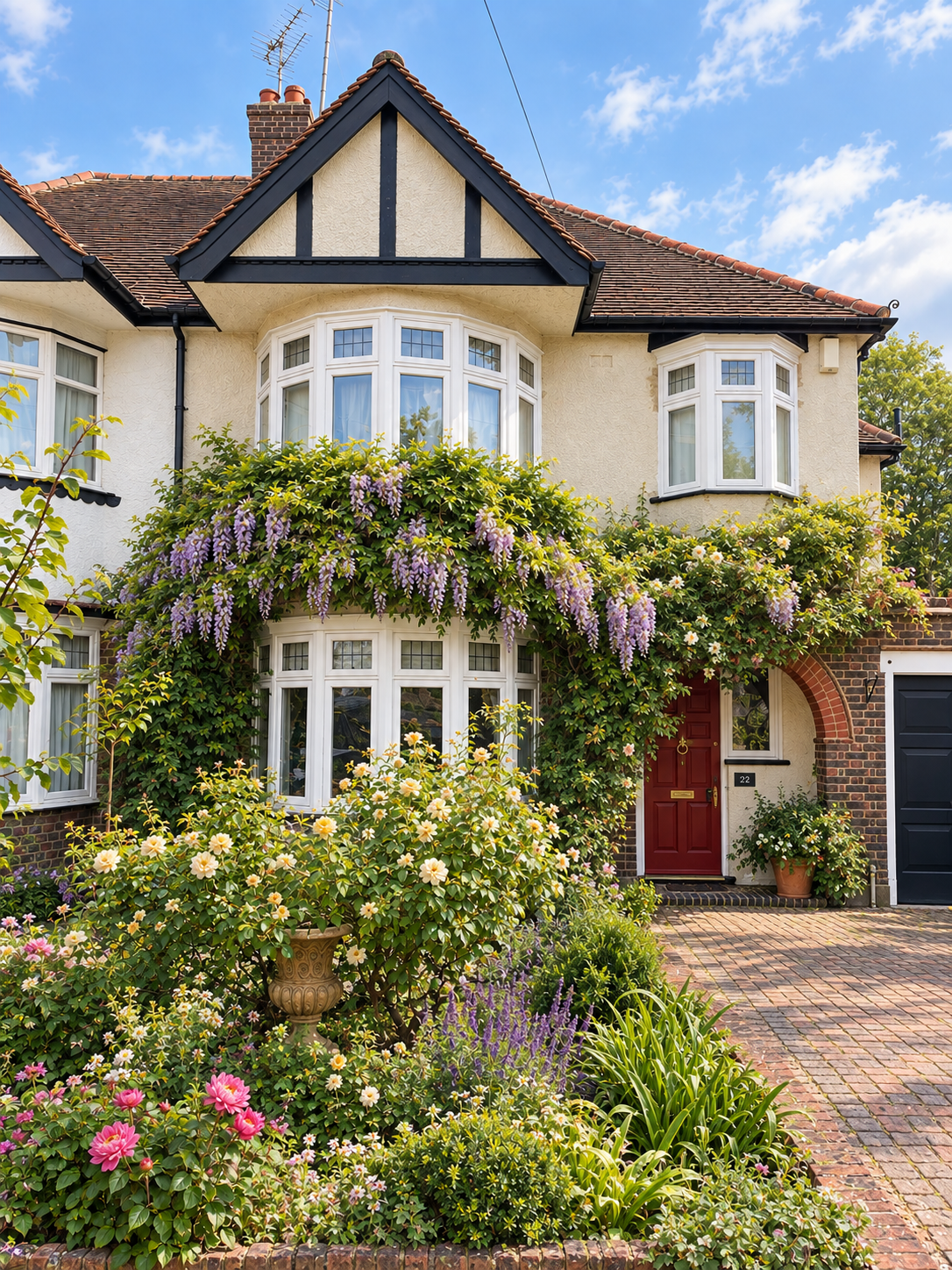 Greenery is attractive
Having some evergreen bushes in the front garden is a good foundation for seasonal plants and flowers. Choosing flower bulbs, such as wild tulips and daffodils, reduces the need to replant every year and gives you the surprise of flowers in the spring.
Having a pair of plants either side of the door is also a pretty, symmetrical look, if you have space for them. My favourite thing is to frame the front door or bay window with a beautiful wisteria. Even though it only flowers for a short time of the year, its green leaves will elevate your kerb appeal for a good few months.
However, if you're going for an autumnal look, pansies, heather, and Midwinter Fire dogwood are great choices. There's a great selection of autumn plants mentioned in
House & Garden.
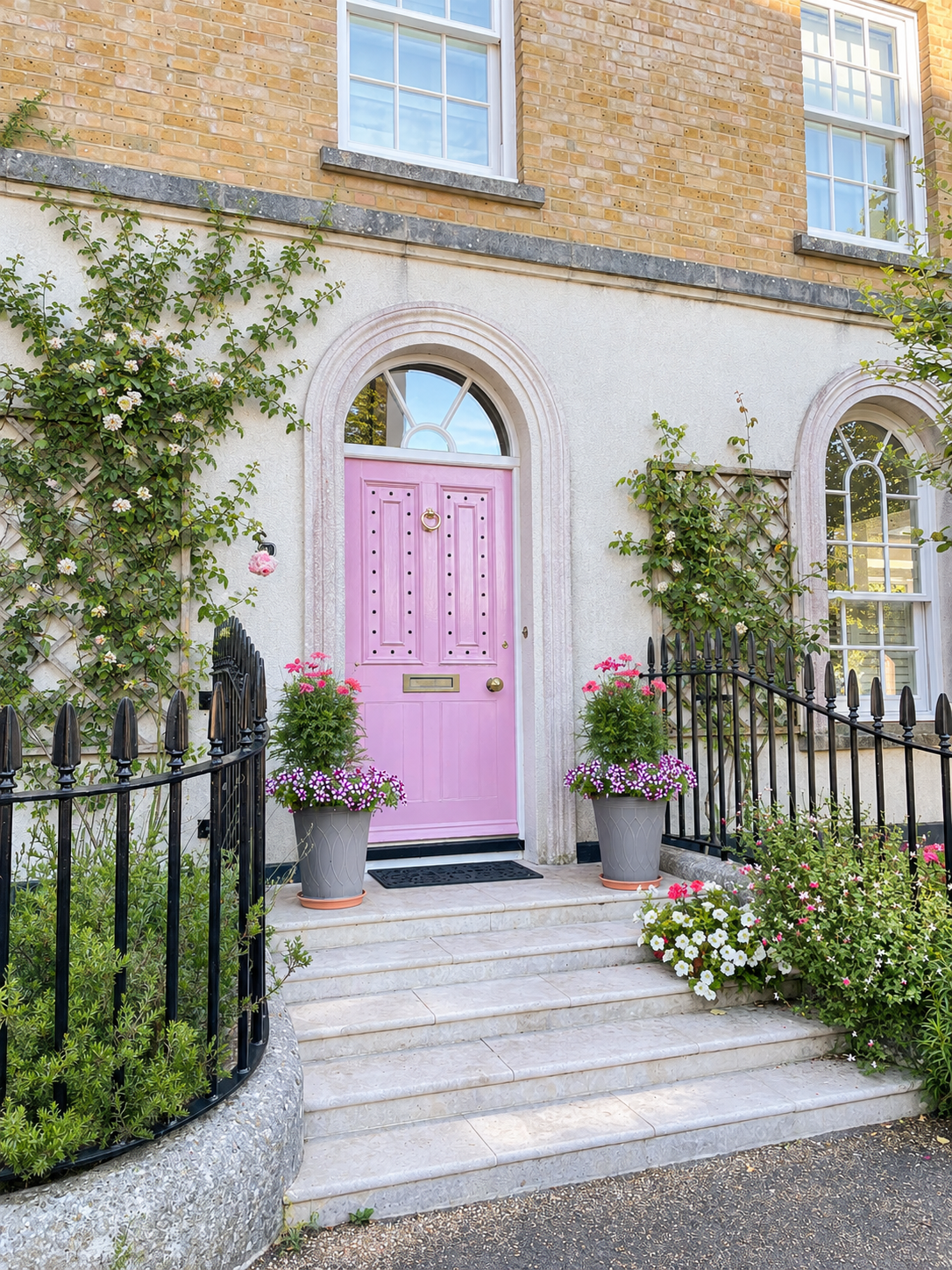
Let the front door pop
Don't be shy when it comes to the front door! There are plenty of options for front doors to match the period of any property, but the good ones do come with a hefty price tag.
A splash of bright paint can immediately make a front door look more expensive and improve the kerb appeal. There are different types of paint for different front door materials, such as wood, metal and uPVC. But, as a common theme, the paint needs to cope with UV exposure (anti-fade), expanding and contracting in variable temperatures, and the inevitable bashing and knocking from going in and out.
I came across a very detailed guide to door paints by Mike Gregory on
Decorators Forum UK, which I thought I'd share with you.
 My pet peeve: resin driveways
I know many of us are after a low-maintenance, manicured and modern look for our driveways, but I cannot bring myself to choose resin for my home. It looks unnatural and gives off plastic vibes. I also have concerns about the environmental impact.
Now, I know you can go for resin bound, which is porous and
SuDS compliant. But the much cheaper (and therefore more popular) resin bonded alternative won't let the water through, which can cause flooding in heavy rain.
Brick or block paving with gaps in between to allow grass to grow is a low-maintenance alternative that allows water to drain through and adds character and charm to the entrance.Or even gravel, which I love the sound of - I know it's not great for heels, but it does have the added benefit of deterring burglars.
As always, lighting
Adding some lighting to the front garden or the exterior of your home can really elevate the look and improve the kerb appeal, especially if your building has architectural features.
One of the most popular types of exterior lighting is the double-sided wall light, as it illuminates the path and also casts light dramatically up the side of the house.
For an easier option, adding some solar garden lights creates a warm and inviting vibe around your home without the need for an electrician.
After the phrase location, location, location, I'll add kerb, kerb, kerb appeal.
If you're looking to sell fast or simply impress your friends, family and neighbours, you need to set the tone right, and that starts at the kerb.